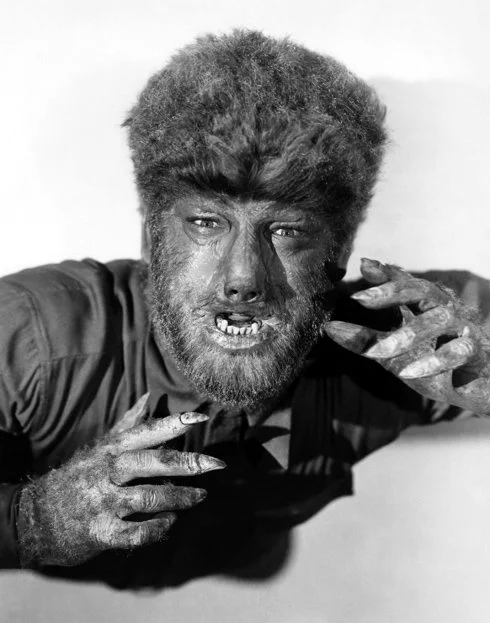
HAPPY BIRTHDAY Creighton TULL CHANEY
Few names in classic horror carry the emotional weight of Lon Chaney Jr. Born Creighton Tull Chaney on February 10, 1906, he lived in the long shadow of his father, the legendary silent-film star Lon Chaney, “The Man of a Thousand Faces.” Where his father vanished into makeup and transformation, Lon Chaney Jr. brought something different to the screen: pain, vulnerability, and tragedy. In doing so, he created one of horror’s most enduring icons.
Becoming the Wolf Man
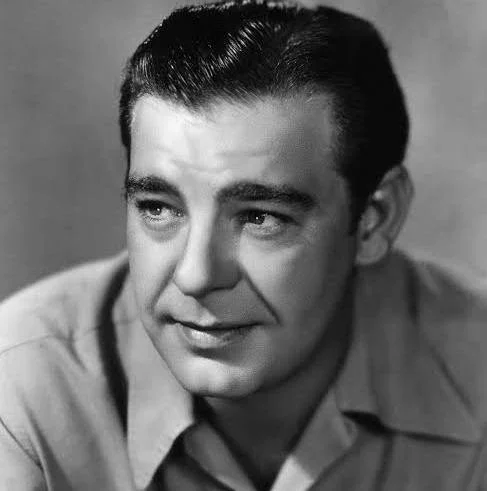
Chaney Jr.’s legacy is forever tied to Larry Talbot, the cursed soul at the center of The Wolf Man (1941). Universal Pictures had plenty of monsters by that point—Dracula, Frankenstein’s Monster, the Mummy—but none felt as human as Talbot. Chaney Jr. didn’t play the Wolf Man as a villain; he played him as a man terrified of what he might become.
That performance changed everything. The Wolf Man wasn’t just scary—he was heartbreaking. The idea that “even a man who is pure in heart…” could still be doomed struck a nerve, and Chaney Jr. made the character unforgettable. For many fans, he didn’t just play the Wolf Man—he was the Wolf Man.
Universal’s Go-To Monster
One of the most remarkable achievements in film history belongs to Lon Chaney Jr.: he is the only actor to portray all four of Universal’s core monsters on screen.
Chaney Jr. played:
The Wolf Man – the role that defined his career
Dracula (Son of Dracula, 1943)
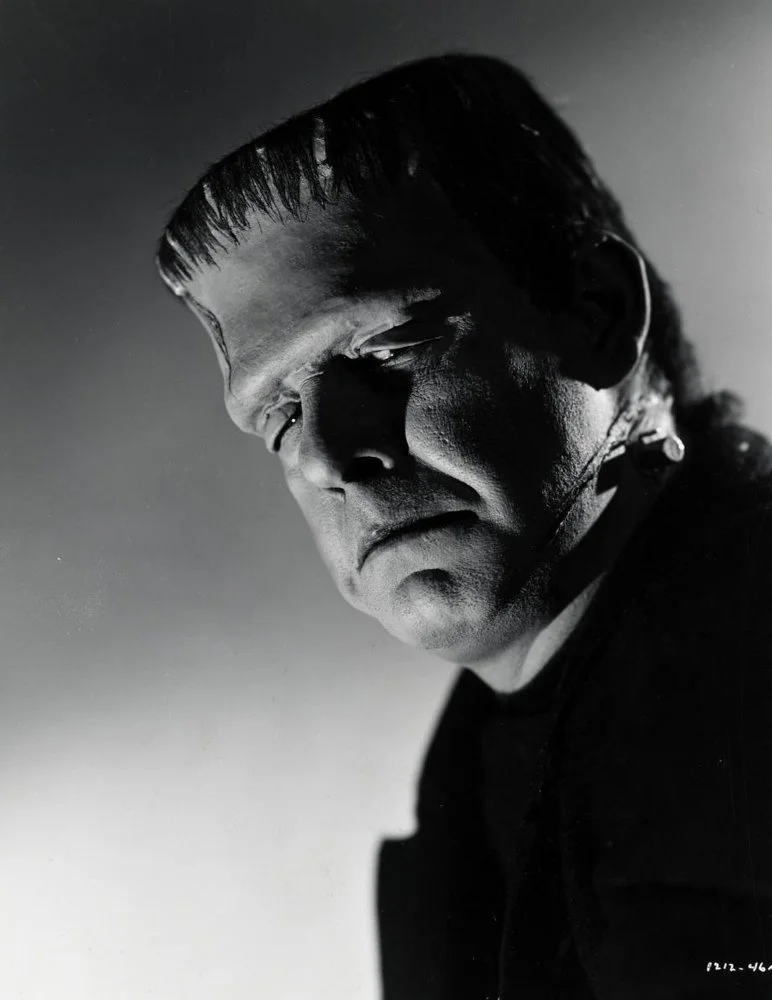
Frankenstein’s Monster (The Ghost of Frankenstein, 1942)
The Mummy (The Mummy’s Tomb and sequels)
No other actor has ever matched this feat. In an era when Universal horror defined the genre, Lon Chaney Jr. became its backbone—literally embodying every major monster the studio had to offer. This wasn’t just versatility; it was endurance, commitment, and a willingness to disappear completely into roles that demanded physical punishment and emotional depth.
A Career Marked by Struggle
Off-screen, Chaney Jr.’s life was far from easy. He battled alcoholism, typecasting, and the pressure of living up to his father’s impossible legacy. Hollywood didn’t always know what to do with him outside of monster roles, even though he proved himself capable in dramas, westerns, and crime films.
Yet those struggles arguably deepened his performances. There’s a rawness to Chaney Jr.’s work—an authenticity that makes his monsters feel cursed rather than evil. He brought sympathy to horror, long before that became the norm.
Late Career and New Generations
In the later years of his career, Chaney Jr. found renewed popularity through genre films, television appearances, and the rise of monster fandom. Abbott and Costello Meet Frankenstein (1948) introduced him to a whole new audience, blending horror and comedy while cementing his place in pop culture.
As horror fans began celebrating the Universal Monsters as timeless icons, Chaney Jr.’s reputation only grew. What was once seen as typecasting became legacy.
The Legacy of Lon Chaney Jr.
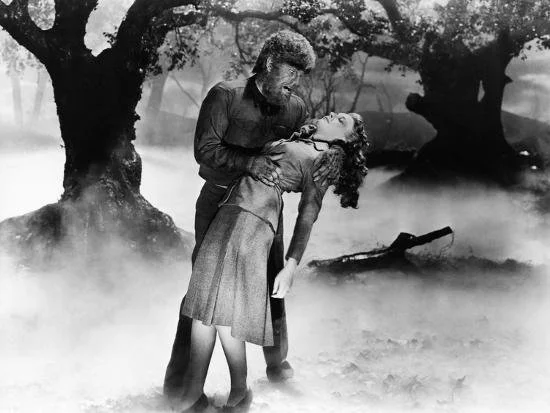
Lon Chaney Jr. passed away in 1973, but his impact has never faded. His Wolf Man remains a cornerstone of horror history, inspiring generations of filmmakers, actors, comic creators, and monster lovers.
More than anything, Chaney Jr. taught us that monsters don’t have to be heartless. Sometimes, they’re just people trying—and failing—to outrun their fate.
At RoboPicto Comics, we celebrate Lon Chaney Jr. not just as a horror icon, but as the soul of the Universal Monsters