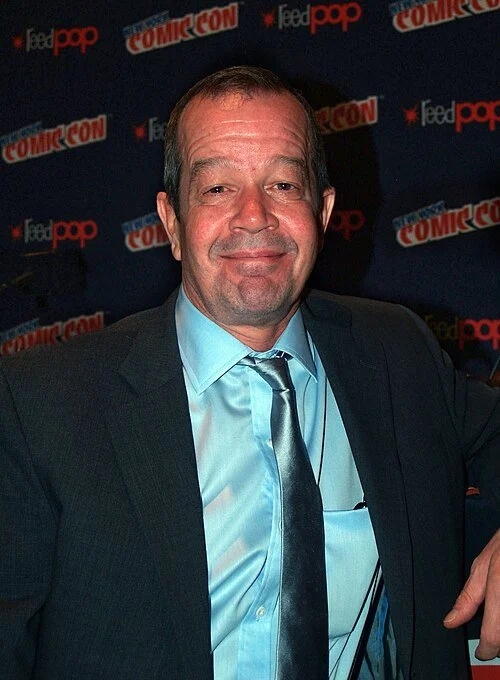
Today, November 16th, we celebrate the birthday of the late, great Darwyn Cooke, born in 1962. An artist, writer, animator, and visionary storyteller, Cooke was one of those rare talents who could take everything wonderful about the Golden and Silver Ages of comics and make it feel fresh again.
In an industry constantly reinventing itself, Cooke understood something that many creators overlook: sometimes the best way to move forward is to remember what made comic books special in the first place.
His career was tragically cut short in 2016, when he passed away at just 53 years old. But in his relatively brief time as a major comic book creator, he left behind a body of work that continues to influence artists, writers, and collectors today.
FROM ANIMATION TO THE COMIC BOOK PAGE
Born in Toronto, Canada, Cooke's journey into comics was anything but traditional.
Although his first published comic book work appeared in DC's New Talent Showcase #19 in 1985, he spent much of his early professional career working in graphic design and advertising before moving into animation.
It was there that Cooke helped shape some of the most beloved animated superhero productions of the 1990s, working with Bruce Timm's team on projects including Batman: The Animated Series, Superman: The Animated Series, and Batman Beyond.
His background in animation would become one of his greatest strengths as a comic book artist.
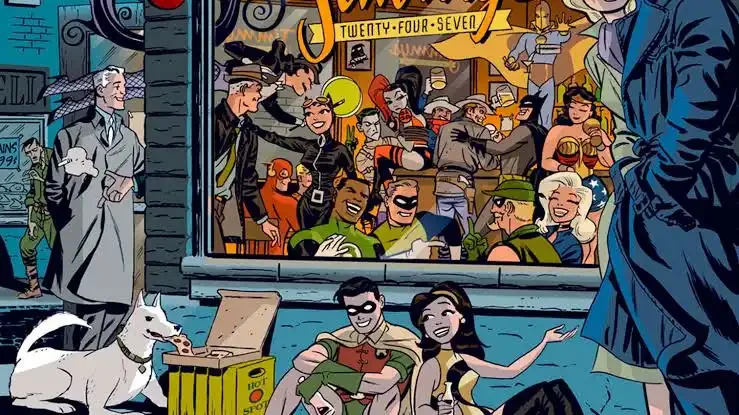
Cooke's artwork was clean, bold, expressive, and full of movement. His characters didn't need excessive detail or complicated rendering to come alive. A simple facial expression, a dramatic silhouette, or a perfectly composed panel could tell an entire story.
His influences were unmistakable. You could see traces of Jack Kirby's power, Alex Toth's simplicity, Will Eisner's storytelling, and the classic illustration styles of mid-century America.
But Cooke was never simply imitating the past. He was taking those influences and creating something entirely his own.
BATMAN, CATWOMAN, AND A NEW GENERATION OF CLASSIC HEROES
Cooke's major return to comic books came with Batman: Ego in 2000, a psychological exploration of the Dark Knight that examined the conflict between Bruce Wayne and the terrifying identity he had created.
It was a remarkable example of Cooke's ability to strip a character down to the essentials while still finding something new to say.
Shortly afterward, he teamed with writer Ed Brubaker to help reinvent Catwoman.
Their interpretation of Selina Kyle brought the character back to her crime-noir roots, presenting her as a sophisticated, streetwise antihero rather than simply another costumed villain.
Cooke's redesigned Catwoman costume, complete with goggles and a sleek black suit, became one of the character's most recognizable modern looks.
His 2002 graphic novel Catwoman: Selina's Big Score further demonstrated his love of crime fiction and classic cinematic storytelling.
These projects established Cooke as more than a talented artist. He was a creator who understood the history of these characters and knew how to make that history work for a modern audience.
DC: THE NEW FRONTIER — HIS MASTERPIECE
If there is one work that defines Darwyn Cooke's legacy, it is undoubtedly DC: The New Frontier.
Published in 2004 as a six-issue miniseries, The New Frontier remains one of the finest celebrations of DC Comics' history ever produced.
Set against the backdrop of 1950s America, the story explores the transition from the Golden Age of superheroes into the Silver Age.
Cooke brought together characters including Superman, Batman, Wonder Woman, Green Lantern, the Flash, and the Martian Manhunter, weaving their stories into a larger narrative about fear, political uncertainty, scientific advancement, and ultimately hope.
What makes The New Frontier so remarkable is how perfectly it captures the spirit of the era.
Cooke understood the optimism that helped define the Silver Age, but he also recognized the complicated world in which those stories were originally published.
The Cold War, the space race, racial injustice, and the changing American identity all play important roles in the narrative.
And through it all, Cooke never loses sight of what makes superheroes special.
They represent the possibility that people can rise above their differences and accomplish something extraordinary.
For collectors and historians, The New Frontier is particularly fascinating because it serves as a love letter to the history of DC Comics.
Cooke didn't simply recreate the past. He celebrated it, examined it, and reminded readers why these characters have endured for generations.
The series earned multiple major industry awards and was adapted into the 2008 animated film Justice League: The New Frontier.
More than twenty years after its original publication, it remains essential reading for anyone who loves the history of superhero comics.
BRINGING WILL EISNER'S THE SPIRIT BACK TO LIFE
Another remarkable chapter in Cooke's career came when he tackled Will Eisner's legendary creation, The Spirit.
Few characters are as closely associated with their original creator as the Spirit is with Eisner, one of the most important figures in the history of sequential art.
Taking on such an iconic property was no small task.
Yet Cooke approached the character with a clear understanding of what made Eisner's work so revolutionary.
His version of The Spirit, launched in 2006, captured the humor, mystery, action, and inventive storytelling that had made the original newspaper feature so influential.
Cooke's pages were filled with clever compositions, expressive characters, and the kind of visual storytelling that recalled the great newspaper strips of the 1940s.
It was a perfect marriage between two generations of comic book creators.
For longtime collectors, it was another reminder that the techniques developed during comics' earliest decades were just as powerful in the twenty-first century.
PARKER AND THE ART OF VISUAL STORYTELLING
While Cooke is best remembered for his superhero work, some of his finest storytelling came outside the traditional comic book world.
Beginning in 2009, he adapted Richard Stark's Parker crime novels into a series of graphic novels published by IDW.
Starting with The Hunter, Cooke brought the hard-boiled world of professional criminal Parker to life with an incredible sense of atmosphere and visual rhythm.
These books showcased his mastery of pacing, page design, and cinematic storytelling.
He could tell a story through long stretches of nearly wordless action, allowing his illustrations to carry the narrative.
His use of limited color palettes, dramatic shadows, and mid-century design made the books feel like lost treasures from another era.
The Parker adaptations also earned him considerable critical acclaim and multiple Eisner Awards.
They remain some of the finest examples of how prose fiction can be transformed into the comic book medium without losing its original identity.
A LEGACY BUILT ON THE LOVE OF COMICS
Perhaps the most remarkable thing about Darwyn Cooke was his ability to make comic books feel timeless.
At a time when superhero comics were frequently becoming darker, more complicated, and increasingly focused on continuity, Cooke reminded readers of the power of simple, effective storytelling.
His characters were heroic without being perfect. His stories could be sophisticated without becoming inaccessible. And his artwork was beautiful without ever sacrificing clarity.
Cooke demonstrated that comic book art didn't need to be overloaded with detail to be powerful.
Every line had a purpose. Every panel moved the story forward.
His work also helped introduce younger readers to the visual language of the Golden and Silver Ages, proving that classic comic book storytelling was not outdated but remained a vital part of the medium.
And for those of us who love collecting older comics, that is perhaps his greatest contribution.
Cooke understood why those early books mattered.
He understood the imagination of Jack Kirby, the elegance of Alex Toth, the innovation of Will Eisner, and the boundless optimism of the Silver Age.
Rather than abandoning those traditions, he built upon them.
REMEMBERING DARWYN COOKE
Darwyn Cooke passed away on May 14, 2016, after a battle with cancer.
His death was a tremendous loss for the comic book industry, particularly because he still had so much more to offer.
But his legacy lives on through the stories he created, the characters he reimagined, and the countless artists who continue to draw inspiration from his work.
From Batman: Ego and Catwoman to The Spirit, Parker, and the unforgettable DC: The New Frontier, Cooke left behind an extraordinary collection of work.
He was a bridge between generations, an artist who understood the history of comic books while helping shape their future.
In many ways, Darwyn Cooke represented everything we love about this hobby: incredible artwork, memorable characters, imaginative storytelling, and a genuine appreciation for the creators who came before.
Happy birthday, Darwyn Cooke. Your work will continue to inspire comic book fans for generations to come.
LONG LIVE THE COLLECTOR!