
HAPPY BIRTHDAY KELLEY JONEs
Kelley JONES Birthday is today and I can’t think of a better way to celebrate than looking at his wild batman run from the 90s.
There's a version of Batman that lives in the shadows of comic book history, one that a lot of fans still argue about to this day. It's not the sleek, tactical Batman of the animated series. It's not the brooding-but-handsome Batman of the movies. It's something stranger, taller, and a whole lot creepier — and it belongs to artist Kelly Jones.
If you know his name, you probably know it from one of two places: his work on Batman: Shadow of the Bat, or his unforgettable run illustrating Batman: Red Rain, the vampire Elseworlds story that still haunts long-time readers. Either way, once you've seen a Kelly Jones Batman, you don't forget it.
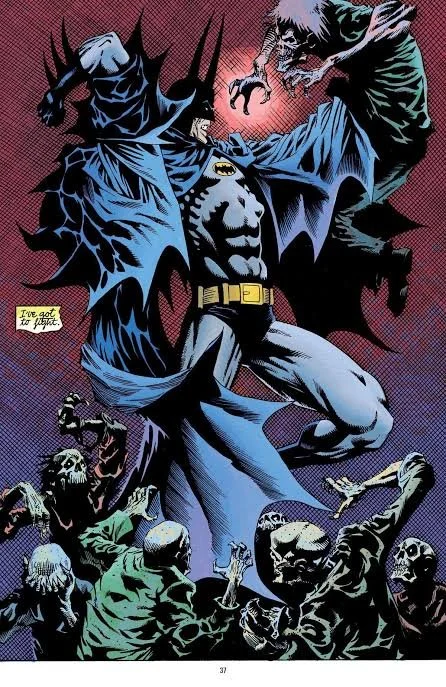
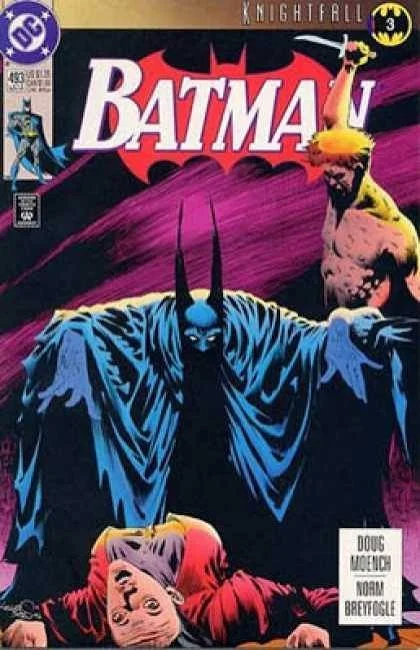
Jones didn't draw Batman like a superhero. He drew him like something that crawled out of a horror novel. The cape stretches and billows unnaturally, more like leathery wings than fabric. The ears on the cowl are impossibly long, almost demonic. His Bruce Wayne is gaunt, angular, all sharp edges and hollow cheekbones — a man who looks less like a billionaire playboy and more like a creature stitched together out of grief and moonlight.
And Gotham itself becomes a character under his pen. Gargoyles loom larger than the buildings they're perched on. Skies bleed red and purple. Rain doesn't just fall, it seems to drip with menace. Everything is oversized, stylized, and just a little bit wrong in the best possible way.
It's not hard to see why this take on the character split the fanbase. A lot of readers came to Batman expecting a grounded, detective-driven crimefighter — someone whose humanity was the whole point. Jones's version leans so far into the monstrous and theatrical that Bruce Wayne can start to feel less like a man in a costume and more like a gargoyle come to life. For readers who want their Dark Knight rooted in realism, that exaggeration can feel like a betrayal of the character's core.
There's also the sheer strangeness of his anatomy and proportions. Bodies twist at unnatural angles. Capes defy physics. It's a deliberately unrealistic style, and if you're not on board with that kind of expressionism, it can read as sloppy rather than intentional.
Here's the thing, though: I think that's exactly the point, and exactly why it works so well.
Batman, at his core, is supposed to be scary. Not scary to us, the readers — scary to criminals. He's meant to be a nightmare made flesh, something that lurks in the dark and makes evil people feel real, primal fear. Most artists soften that idea to keep Bruce sympathetic and heroic-looking. Jones refuses to soften it. He draws Batman the way a criminal cowering in an alley might actually perceive him: too tall, too sharp, not quite human, impossible to reason with.
That's what makes his run so memorable to me. It's unapologetically atmospheric. It's gothic horror wearing a superhero comic's clothing. Every page feels like it belongs in a haunted cathedral instead of a modern city, and that mood does so much of the storytelling's heavy lifting. You don't need extra narration to feel dread when the linework itself is dripping with it.
It's also just refreshing. Batman has been drawn a thousand ways by a thousand talented artists, and most of them converge on some version of "tactical ninja" or "brooding action hero." Jones took a hard left turn into something closer to German Expressionist horror, and the character was better for the detour, at least for however long his run lasted.
Kelly Jones's Batman isn't for everyone, and that's fine. Comics are richer when artists take real swings instead of playing it safe, and his run on the character is nothing if not a swing. Divisive art tends to be the art people still talk about decades later — and here we are, still talking about it.
If you've never seen it, it's worth tracking down just to see how far an artist can push a familiar character and still make it recognizably, unmistakably HIM.
