Happy Birthday Lon Chaney
Before we had CGI monsters, we had makeup cases—and the wildly talented Lon Chaney. Happy birthday to the legend who truly helped spark the monster craze and showed the world just how powerful transformation on screen could be.
Lon Chaney remains one of the most fascinating and transformative figures in early cinema—a performer whose legacy still echoes through the horror genre today. Known as “The Man of a Thousand Faces,” Chaney earned this title not just through makeup, but through an extraordinary ability to inhabit characters completely, physically and emotionally. Nowhere is this more evident than in his unforgettable performances in The Hunchback of Notre Dame (1923), The Phantom of the Opera (1925), and the haunting London After Midnight (1927).
Born in 1883 to deaf parents, Chaney grew up in a world where communication relied heavily on visual expression. He learned sign language at a young age, and this upbringing profoundly shaped his acting style. Without relying on spoken dialogue—especially critical in the silent film era—Chaney mastered the art of conveying deep emotion through subtle facial expressions, deliberate gestures, and body language. This ability set him apart from his contemporaries and allowed him to bring an unmatched depth to even the most grotesque or tragic characters.
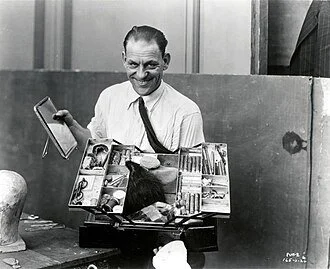
Chaney was also a pioneer of cinematic makeup. Unlike many actors of his time, he designed and applied his own makeup, often using unconventional and even painful techniques to achieve his transformations. His commitment to realism and shock value pushed the boundaries of what audiences had ever seen, helping to define the visual language of horror for decades to come.
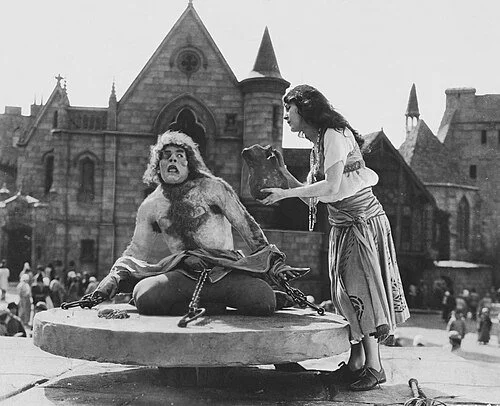
In The Hunchback of Notre Dame, Chaney’s portrayal of Quasimodo is nothing short of astonishing. Beneath layers of painful makeup and a massive prosthetic hump, he delivers a performance filled with humanity, sorrow, and longing. What makes his work even more remarkable is that Chaney performed all of his own stunts. Climbing the cathedral set, swinging from ropes, and enduring physically demanding scenes, he fully committed himself to the role. The physical toll was immense, but the result was a portrayal that remains definitive to this day—a perfect blend of monstrosity and vulnerability.
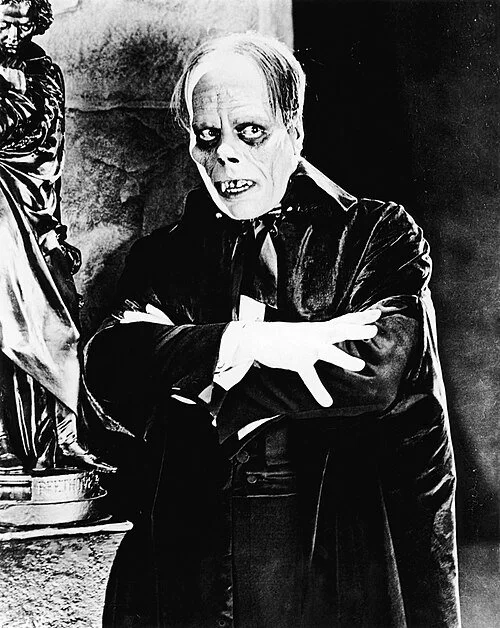
If Quasimodo showcased Chaney’s physical endurance and emotional depth, then The Phantom of the Opera revealed his genius for transformation and horror. His version of the Phantom is both terrifying and tragic, a figure whose grotesque exterior masks profound loneliness and obsession. Once again, Chaney designed and applied his own makeup, creating a skull-like visage that shocked audiences of the time—and still holds power today. Many have said the role was made for him, and it’s easy to see why. His control over every detail of the character, from posture to expression, resulted in a performance that defined the Phantom for generations.
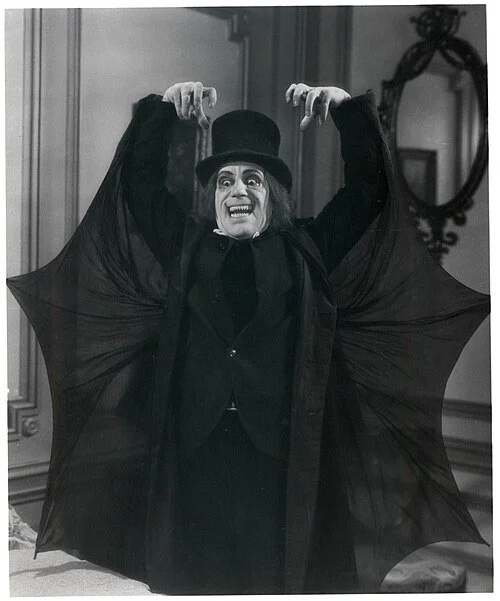
Then there is London After Midnight, a film lost but legendary in reputation. Chaney’s eerie, ghoul-like appearance—with sharpened teeth, a top hat, and bulging eyes—has become one of the most iconic images in silent horror. Even without the film itself surviving, the still photographs alone are enough to demonstrate his uncanny ability to disturb and captivate audiences.
Tragically, Chaney’s life and career were cut short when he passed away in 1930. At the time, he was widely considered the top choice to portray Count Dracula in what would become one of the most iconic horror roles in film history.
What ties all of these performances together is Chaney’s commitment to storytelling through physicality. His characters often existed on the fringes of society—misunderstood, feared, or pitied—but he portrayed them with dignity and emotional truth. His upbringing gave him a unique sensitivity to nonverbal communication, and he used it to create performances that transcended the limitations of silent film.
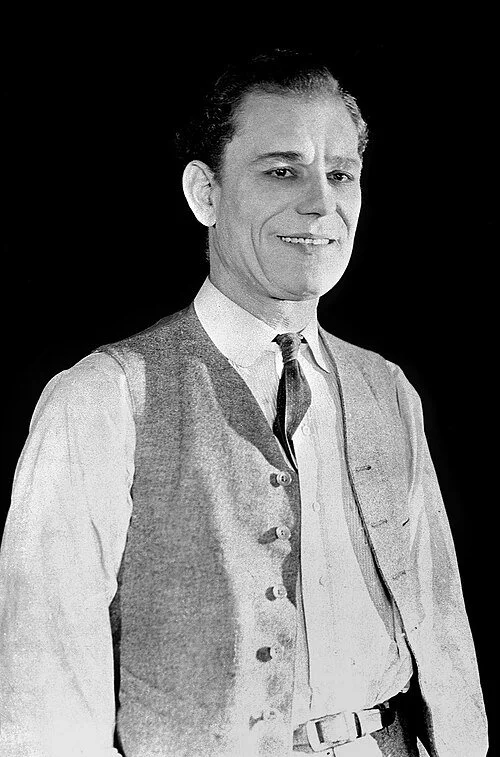
Lon Chaney didn’t just wear different faces—he gave them life. Whether as the tragic Quasimodo, the haunting Phantom, or the nightmarish figure in London After Midnight, he transformed himself completely, leaving behind a body of work that continues to inspire actors and filmmakers alike. His legacy is not only in the characters he played, but in the art of performance itself—proving that sometimes, the most powerful stories are told without a single word.