The Wildest Comic Book Ads of the '60s & '70s
If you spent any time reading vintage comics as a kid, you know the drill. You'd finish the last page, flip to the back, and suddenly find yourself in a parallel universe — one where a pair of cardboard glasses could give you X-ray vision, where a pouch of powder could turn plain water into a family of tiny humanoids, and where a skinny kid from the beach could become a muscle-bound legend in just 15 minutes a day.
The back pages of comic books from the 1960s and '70s were a masterclass in creative deception. Part carnival barker, part fever dream, these ads sold impossible promises to kids who desperately wanted to believe. Most of the products were overpriced junk. Some were outright scams. And yet, they were weirdly, unforgettably magical.
Here are the greatest offenders.
1. Sea-Monkeys — The Crown Jewel of Comic Book Cons
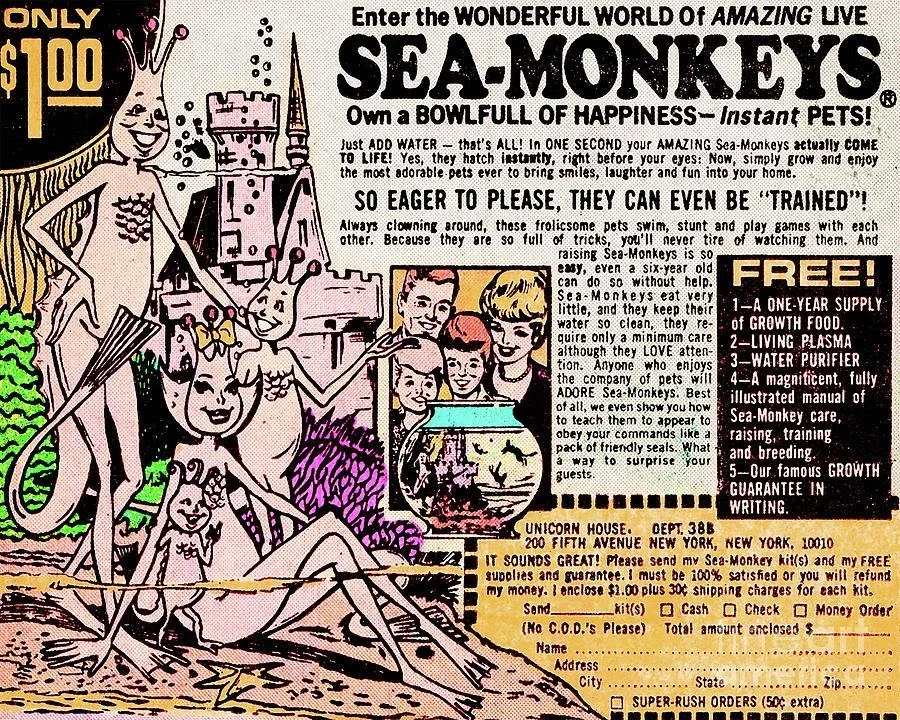
No list of vintage comic ads is complete without Sea-Monkeys, and for good reason: they were the most audaciously misleading product ever sold to children, and somehow they still exist today.
The ads depicted a cheerful underwater kingdom populated by a humanoid royal family — a smiling king and queen, their little sea-monkey children, all living their best lives in a fishbowl on your dresser. The art was legitimately compelling, illustrated by none other than Joe Orlando.
What arrived in the mail was a small packet of brine shrimp eggs. Specifically, Artemia NYOS — a hybrid breed that, when added to water, would hatch into tiny, nearly invisible crustaceans that looked absolutely nothing like the family in the ads.
Kids across America went through the same five stages of grief. And yet Sea-Monkeys persisted for decades, a testament to the power of a good illustration and an imaginative copywriter.
The promise: A loyal family of tiny humanoid sea creatures you could raise and love. The reality: Microscopic shrimp that died if you looked at them wrong.
2. X-Ray Specs — Peak Audacity
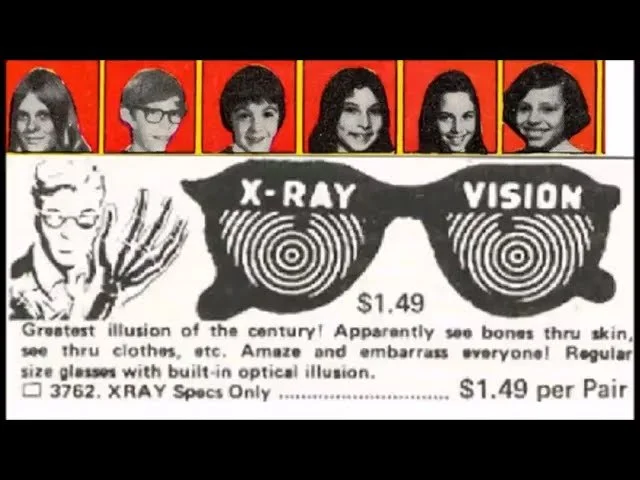
The X-Ray Specs ad was a monument to nerve. It promised, with a straight face, that a pair of glasses could give the wearer genuine X-ray vision — the ability to see through solid objects, peek at bones inside hands, and generally perceive the world like Superman.
The actual product was a pair of cardboard novelty glasses with a small feather embedded inside each lens. When light hit the feather at the right angle, it created a blurry double-image effect that, if you squinted just right and really committed to the bit, vaguely suggested the outline of bones in your hand.
The ads ran for years. Millions of kids ordered them. The magic lasted approximately four minutes.
The promise: X-ray vision. Actual X-ray vision. The reality: A cardboard feather trick you'd forget about by lunchtime.
3. Hypnosis Kits — A Different Era
This one requires some historical context, because by any modern standard it is absolutely unhinged.
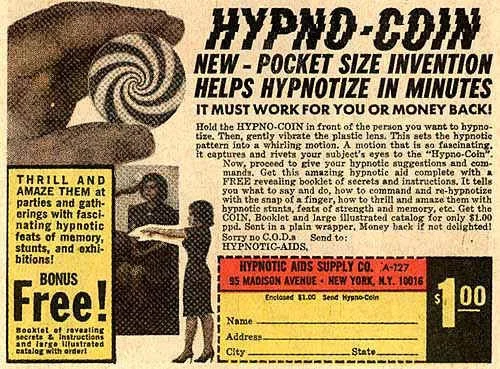
Throughout the 1970s, comic books ran a steady stream of ads for hypnosis devices and kits, and these ads were almost uniformly pitched as tools for controlling members of the opposite sex. "Put anyone under your power!" was a common tagline. These products were marketed to children. In comics sold at newsstands and corner stores. Without irony.
The devices themselves ranged from spinning spiral cards to pendants to little "hypno-coins" — all equally ineffective at doing anything except confirming that comic book advertisers in the '70s operated in a very different regulatory environment than today.
The promise: Mind control over whoever you pointed it at. The reality: A spinning cardboard disc. Also, please don't try to hypnotize anyone.
4. Charles Atlas — The Ad That Never Died
In a field full of gimmicks and fly-by-night promotions, Charles Atlas stands apart for one simple reason: it actually worked, or at least, the marketing did.
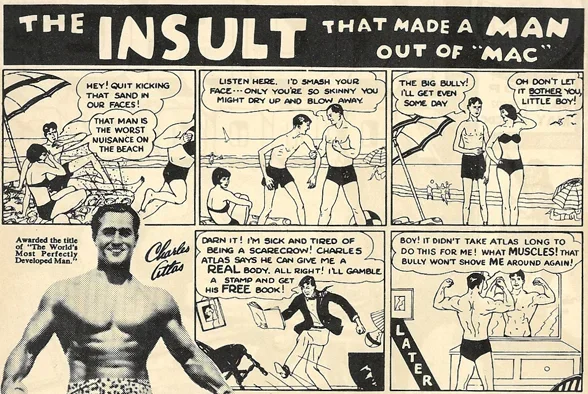
The "Dynamic Tension" campaign ran in some form from the 1930s all the way into the 1980s — roughly half a century of the same basic ad, depicting a skinny kid getting sand kicked in his face at the beach, then transforming himself through Atlas's workout method into a muscular hero who wins back the girl and the respect of his peers.
The strip-format ad was one of the most recognizable pieces of American advertising of the 20th century. It was honest about what it was selling (a bodybuilding course), visually compelling, and emotionally sophisticated in a way most comics ads never bothered to be. And it just kept running, year after year, outlasting every gimmick around it.
The promise: A better body through isometric exercise. The reality: An actual workout routine that some people actually followed.
5. The Shrunken Head
Proof that not every ad needed an elaborate pitch — sometimes you just needed a weird enough product.
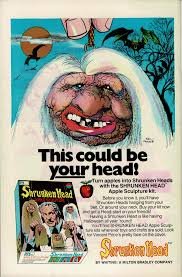
The shrunken head ad promised a genuine, displayable shrunken human head. For a dollar or two, you could own one, terrify your friends, and generally live your best eccentric life.
What arrived was a painted rubber ball roughly approximating a human face, with yarn for hair. It did not terrify anyone. It did, however, become one of the more iconic artifacts of the era's back-page aesthetic — weird, cheap, and utterly charming in retrospect.
The promise: Anthropological novelty and guaranteed scares. The reality: A sad little rubber ball with a face painted on it.